What Do Soffit and Fascia Actually Do?
Fascia
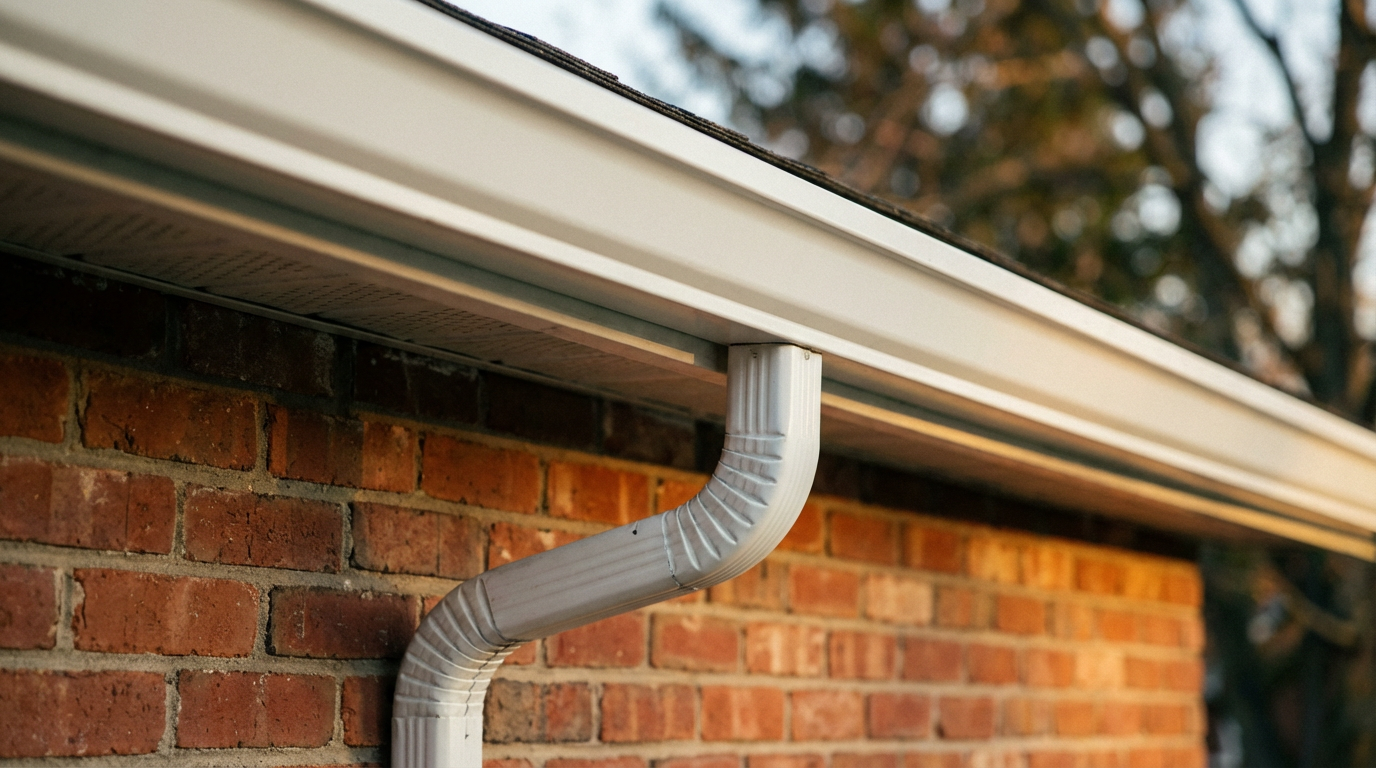
Fascia is the horizontal board that runs along the edge of your roofline, just behind your eavestroughs. It serves two main purposes: it supports and anchors your eavestroughs, and it seals the gap between the edge of the roof and the outside of your home.
When fascia fails, water can get behind your eavestroughs and into your roof structure. Your eavestroughs may sag or pull away from the house. And pests can find their way into your attic.
Soffit
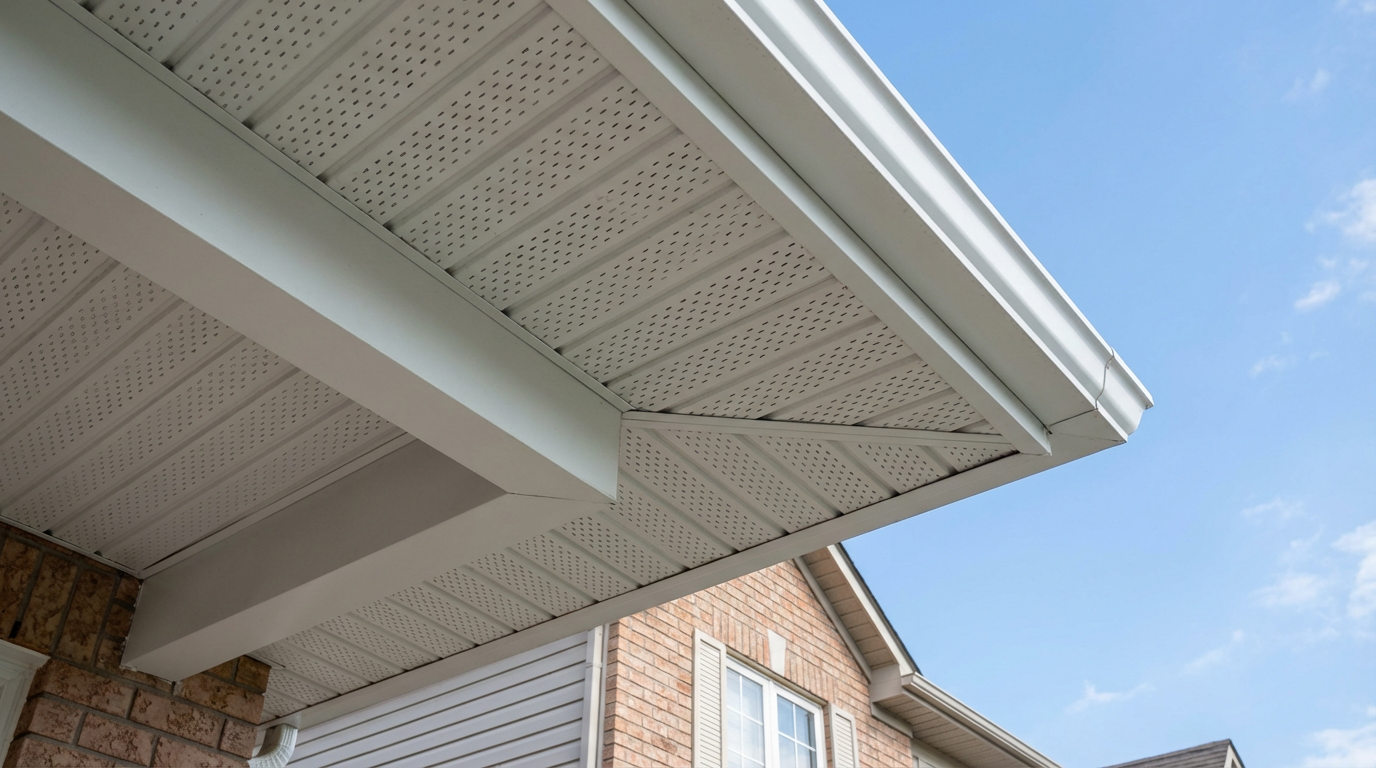
Soffit is the material that covers the underside of your roof overhang, the part you see when you look up under the eaves. Most soffit panels are vented, meaning they have small perforations that allow air to flow into your attic space.
That ventilation is critical. Without it, moisture builds up in your attic, leading to mould growth, rotting roof sheathing, and ice damming in winter.
How to Spot Problems Early
You don’t need to climb a ladder for this. A walk around your home can reveal most issues:
Look Up at Your Soffit
- Peeling or flaking paint. Moisture is getting to the material.
- Staining or discolouration. Water is pooling or running where it shouldn’t.
- Visible gaps or holes. Potential pest entry points.
- Sagging panels. The material is deteriorating or was improperly installed.
Check Your Fascia
- Rotting or soft spots. Press gently with your finger; healthy fascia should feel solid.
- Peeling paint or exposed wood. The protective surface is failing.
- Eavestroughs pulling away. Often caused by fascia that can no longer hold the weight.
- Animal activity. Chew marks, nesting material, or scratching sounds in the attic.
Inside Your Attic
- Excessive heat in summer. Poor soffit ventilation.
- Frost or moisture on the underside of the roof sheathing. Ventilation or vapour barrier issue.
- Evidence of animals. Droppings, nesting, or daylight visible through gaps.
Common Causes of Damage in Ontario
Freeze-Thaw Cycles
Ontario’s winters are hard on soffit and fascia. Water gets into small cracks, freezes, expands, and widens the damage. Over multiple seasons, this can turn a hairline crack into a section that needs replacement.
Ice Damming
When heat escapes through a poorly ventilated attic, it melts snow on the roof. That meltwater runs down to the colder eaves and refreezes, forming ice dams. Those dams trap water against your fascia and can push moisture up under your shingles and into your soffit.
Proper soffit ventilation is one of the most effective ways to prevent ice damming.
Animal Damage
Raccoons, squirrels, and birds are common culprits. A small gap in your soffit is an invitation. Once inside your attic, these animals can cause significant damage to insulation, wiring, and the soffit itself.
Age and Weather Exposure
Even quality materials have a lifespan. Aluminum and vinyl soffit typically last 20 to 40 years, but south-facing sections that get more sun and weather exposure may deteriorate faster.
Repair or Replace?
Not every soffit or fascia issue requires a full replacement:
Repair is often enough when:
- The damage is limited to one section
- The underlying structure (roof edge, rafters) is still solid
- The rest of the soffit/fascia is in good condition
Replacement is the better choice when:
- Multiple sections are deteriorating
- The existing material is more than 25 years old
- You’re seeing recurring problems (leaks, pests) despite repairs
- You’re doing other exterior work at the same time
When we visit your property, we’ll give you an honest recommendation. If a repair will hold, we’ll say so.
Materials: Aluminum vs. Vinyl
| Feature | Aluminum | Vinyl |
|---|---|---|
| Durability | Higher, handles impacts better | Good, but can crack in extreme cold |
| Maintenance | Very low | Very low |
| Cost | Moderate | Lower |
| Colour options | Wide range | Wide range |
| Ventilation | Available in vented panels | Available in vented panels |
| Lifespan | 30-40+ years | 20-30 years |
We carry products from Gentek, Kaycan, and Mitten in both materials. For most GTA homes, we recommend aluminum for its durability in our climate, but vinyl is a solid choice when budget is the primary concern.
Why Soffit and Fascia Matter More Than You Think
These components are easy to overlook because you don’t see them every day. But they protect your roof edge, support your eavestroughs, ventilate your attic, and keep pests out. When they fail, the problems tend to cascade into more expensive repairs.
A quick visual check once or twice a year, especially after winter, is one of the simplest things you can do to protect your home.