
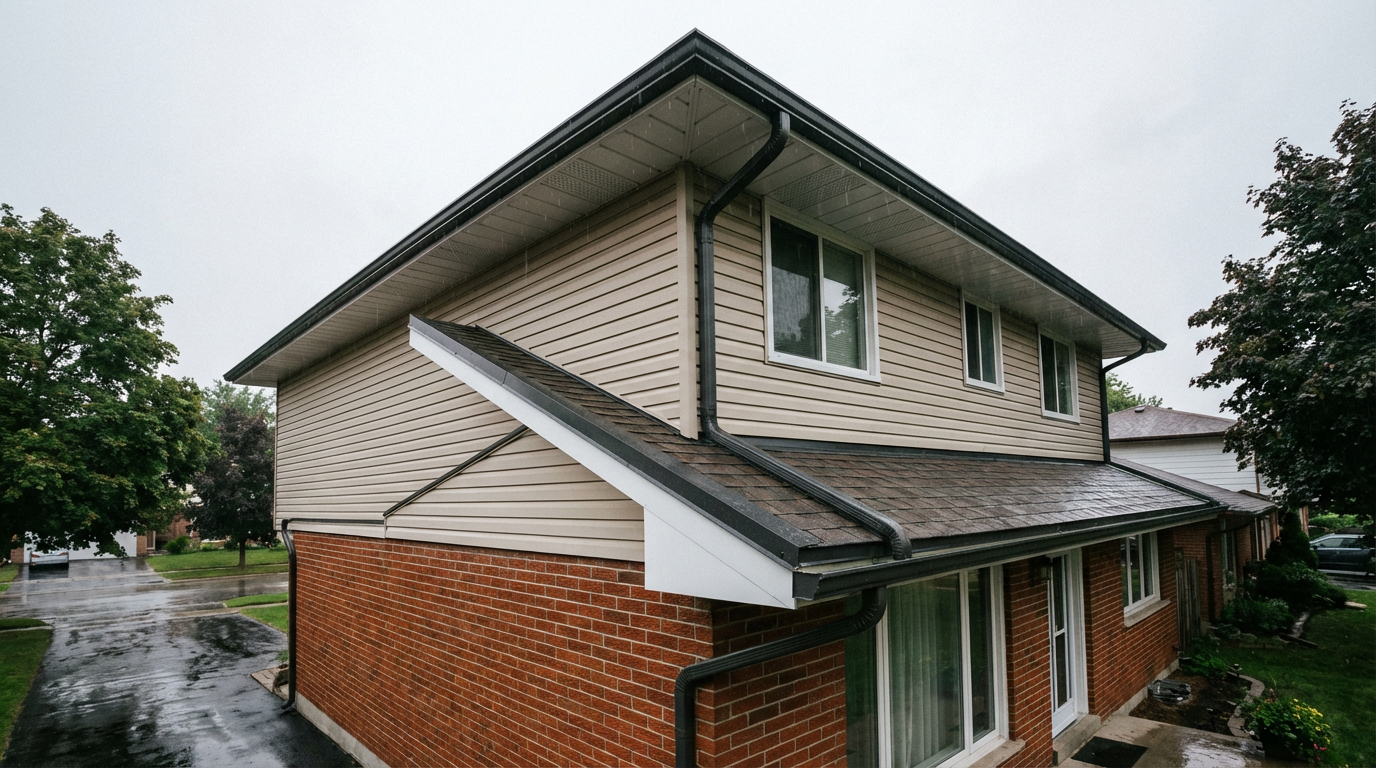
Here's what most property owners don't know:
When exterior problems recur, it's rarely because the repair didn't hold. Instead, it's because the root cause wasn't identified.
Gutters, siding, soffit, fascia, and flashing do not fail independently. They fail as a system. When one component is slightly off, the symptom shows up somewhere else.
That's why leaks return. That's why siding shifts. And that's why repairs become a pattern instead of a solution.
The Real Cost of "Almost Fixed"
Most recurring exterior issues are not dramatic at first. They are small misalignments. Minor slope errors. Subtle fastening mistakes. Improper flashing sequencing.
Individually, they seem harmless, but over time, they compound.
Water does not need a large opening. It simply needs consistency. That's why those quick repairs often feel temporary.
If you have experienced this pattern, what follows will help you understand what may be happening beneath the surface.
Let's look at what typically gets missed with most homes in Ontario.
Gutters That Keep Leaking
Gutters are simple in appearance, but exact in function. Recurring gutter leaks are rarely caused by "bad sealant." In most cases, GTA homeowners face the following:
Improper Slope
Gutters should slope approximately 1/4 inch for every 10 feet toward the downspout. If the pitch is too flat, water pools. If it is too steep, water overshoots seams and joints. Pooling accelerates corrosion, joint separation, and ice damming in winter.
Incorrectly Joined Seams
Ontario's freeze-thaw cycles expand and contract metal repeatedly. If joints were misaligned or forced together, the expansion and contraction that naturally happens with Ontario's weather will reopen those seams.
The result is a leak that keeps returning in the same location. Repeated sealing won't correct these issues.
Poorly Designed Downspout Outlets
Outlet holes that are too small, poorly cut, or positioned at the wrong point in the run restrict flow. During heavy rainfall, water backs up and spills over, leading homeowners to believe the entire gutter system is failing.
Siding That Shifts, Warps, or Lets Water In
Siding failures are often misunderstood because they develop discreetly over time. Most homeowners don't realize until there's visible damage. Siding failures are commonly installation related, not material related.
Fastened Too Tightly
Vinyl siding must move to allow for expansion and contraction. When nailed too tightly, panels buckle, crack, or pull away under temperature changes. This creates openings for wind-driven rain, allowing water to enter behind the siding.
Look for: Panels that appear rigid or distorted. Warping that worsens with temperature swings.
Missing or Incorrect Flashing
Siding alone does not waterproof your home. Flashing directs water away from vulnerable areas such as windows and roof lines. If flashing is layered incorrectly, water can travel behind siding even when panels appear intact. Interior moisture stains often trace back to flashing issues, not siding itself.
High Winds in the GTA
In areas like Mississauga, Oakville, Brampton, Caledon, and Hamilton, wind exposure varies significantly by neighbourhood. Improperly locked or secured panels can detach under repeated gusts.
When siding repeatedly comes loose, the issue is often the fastening pattern or anchoring depth.
Soffit and Fascia Problems That Signal Bigger Issues
These parts rarely receive attention, yet they're critical for ventilation and structural protection.
Raccoon Entry Points
Raccoons frequently pull down soffit panels to access attic space. Once disturbed, soffit panels no longer seal properly. Moisture and pests gain access easily.
Though animal removal solves one issue, an exterior restoration completes the solution. Repairing the wreckage left behind without reinforcing the vulnerable entry point often leads to repeat intrusion.
Water-Damaged or Wind-Damaged Fascia
Fascia boards absorb moisture if gutters overflow or shift. Over time, rot weakens structural support. When fascia deteriorates, gutter alignment follows.
The same also applies to wind-damaged fascia. It may look cosmetic at first, but it rarely is.
Ventilation Problems
Soffits provide intake ventilation for attics. Poor airflow increases moisture accumulation, contributing to ice dams in winter and mould risk year-round.
Flashing Failures That Go Undetected
Flashing protects joints and transitions, roof-to-wall intersections, chimneys, and window perimeters.
When flashing is improperly sealed, corroded, or installed out of sequence, water finds a path inward. Because flashing sits beneath visible materials, it is often overlooked during quick repairs.
When installed correctly, flashing works efficiently for decades. When installed incorrectly, it becomes a recurring service call.
If water is entering but your siding and roofing appear intact, flashing deserves close inspection.
Seasonal Stress in Ontario
Most Ontario homes face:
- Heavy snow accumulation
- Freeze-thaw expansion
- Spring and fall downpours
- Summer windstorms
Each cycle magnifies small installation errors. A system that appears stable in dry weather may fail under seasonal stress.
Understanding how these elements interact is the difference between patching and solving.
Spring
Clear debris and make sure drainage is working properly.
Summer
Inspect siding movement and seal integrity.
Fall
Make sure gutters are clear before freeze-up.
Winter
Monitor for ice dams and interior moisture signs.
What a Proper Exterior Inspection Should Include
A proper exterior assessment looks at the full system, not one isolated symptom. A true diagnostic inspection should evaluate:
- Gutter pitch, structural support, and joint integrity
- Downspout capacity and drainage paths
- Siding fastening and expansion spacing
- Flashing sequencing at all transitions
- Fascia condition, attachment, and load distribution
- Soffit ventilation and pest vulnerability
Our team evaluates the exterior as one connected system. When these components are assessed together, those frustrating, recurring problems become solvable.
How Do You Know It's Time to Stop Repairing and Start Diagnosing?
If you have:
- Paid for multiple gutter repairs in the same location
- Reattached siding more than once
- Replaced sealant repeatedly
- Seen leaks return after "fixes"
- Googled how-to article after how-to article
It may not be a repair issue. It may be a diagnostic issue. The right assessment identifies the root cause before determining the right solution.